Can an Emergency Dentist Save a Tooth With Deep Decay?

When deep decay reaches the point of severe pain, swelling, or a sudden break, most people stop thinking about routine dentistry and start asking a far more urgent question: can this tooth still be saved?
The short answer is often yes, but not always. An Emergency Dentist can sometimes preserve a badly decayed tooth with prompt treatment, even when the situation feels dire. The deciding factors are not just the size of the cavity. Timing matters. So does how far the decay has traveled, whether the pulp is infected, whether the tooth has enough healthy structure left to support a restoration, and whether the surrounding bone and gums remain stable.
That is where emergency care becomes so important. Deep decay is not just a bigger cavity. It is a structural and biological problem that can shift quickly from manageable to unsalvageable. A tooth that might be saved on Monday can become a candidate for extraction by the weekend if infection spreads, the crown fractures below the gumline, or the root develops a vertical crack.
What “deep decay” really means
People use the phrase loosely, but dentists usually mean decay that has passed through the enamel and dentin and is approaching or involving the pulp, the soft tissue inside the tooth that contains nerves and blood vessels. At that stage, the tooth often becomes sensitive to cold, heat, sweets, pressure, or all of the above. Sometimes the pain is constant and throbbing. Other times, oddly enough, there is little pain at all until the tooth breaks or an abscess forms.
A small surface cavity can usually be repaired with a filling. Deep decay is different because it threatens the life of the tooth. Once bacteria reach the pulp, the tissue can become inflamed, then infected, then necrotic. If that happens, the infection may move beyond the root tip into the surrounding bone. This is when people often wake up with facial swelling, a bad taste in the mouth, pain when biting, or a feeling that the tooth has become too tall to touch comfortably.
From a clinical standpoint, there are several levels of seriousness. Some deep lesions are very close to the nerve but have not yet caused irreversible damage. Others already require root canal treatment. Still others have destroyed so much structure that even after infection is treated, there is not enough tooth left to restore predictably.
What an emergency visit can actually accomplish
An emergency dental appointment is designed to answer two immediate questions. First, what is causing the problem? Second, what can be done right now to stop pain, control infection, and keep options open?
In many cases, the first goal is stabilization. That can mean removing decay, draining an abscess, prescribing medication when appropriate, placing a temporary restoration, or starting root canal treatment. Some patients assume that a single emergency visit always solves everything. Sometimes it does. More often, it begins a sequence of care that saves the tooth over the next several days or weeks.
A common scenario looks like this: a patient arrives with severe pain from a molar that has a large hidden cavity under an old filling. The Emergency Dentist takes X-rays, performs pulp testing, and finds that the nerve is either irreversibly inflamed or already infected. If the roots are intact and there is enough tooth left above the gumline, the dentist may open the tooth, remove infected tissue, place medication, and either complete or begin root canal therapy. Once the infection is controlled, the tooth is usually rebuilt and covered with a crown.
That tooth may feel hopeless to the patient in the moment, yet it is often quite saveable.
The signs that a tooth may still be saved
Dentists do not decide based on pain alone. A surprisingly painful tooth can be very treatable, while a relatively quiet one can be beyond repair. The evaluation depends on several practical findings:
- The root is solid and not vertically cracked.
- The decay has not extended so far below the gumline that restoration becomes impossible.
- The surrounding bone still offers good support.
- Infection, if present, can be cleaned out and controlled.
- Enough healthy tooth remains to hold a filling, core, or crown.
If those conditions are met, saving the tooth is often the preferred option. Natural teeth still outperform replacements in many everyday ways. They preserve normal chewing feel, maintain bone stimulation, and avoid the complexity and cost that come with bridges or implants.
This is particularly true for back teeth. A molar with deep decay may look like a disaster on an X-ray, but if the roots are healthy and the periodontal support is good, root canal treatment followed by a well-made crown can give that tooth many more years of service.
When saving the tooth becomes unlikely
There are times when heroic treatment is not good treatment. A skilled Emergency Dentist should be candid about that.
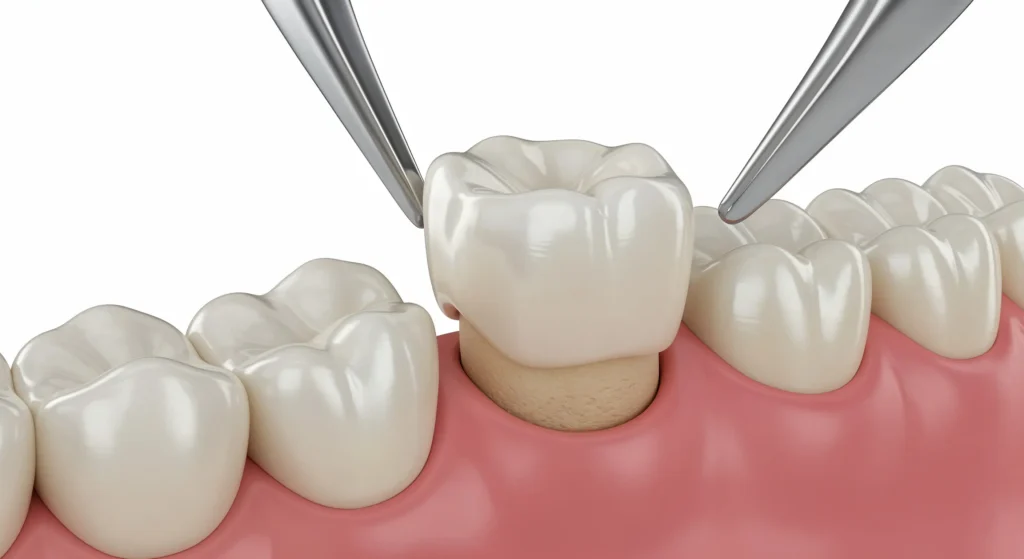
If decay extends far below the gumline and deep into the root, there may be no reliable way to rebuild the tooth. If the tooth is split vertically, especially through the root, extraction is usually the only realistic option. If there is extensive bone loss from periodontal disease, the tooth may not have enough support even if the decay itself is technically treatable. In other cases, the damage from neglect is not just internal. The crown has broken down so thoroughly that there is almost nothing left to anchor a final restoration.
One of the hardest conversations in emergency care happens when a patient has postponed treatment because the tooth “settled down.” Pain often decreases when the nerve dies, but that is not improvement. It can mean the pulp has become necrotic. By the time swelling appears, the infection may be significant. A root canal may still be possible, but delay narrows the window.
Another complicating factor is repeated repair. A tooth with deep decay under an old filling, then a crown, then recurrent decay again, has already used some of its structural reserve. Every repair removes a bit more tooth. Eventually the question is not “Can we save it today?” but “Can we save it in a way that will last?”
Root canal treatment is often the turning point
For deep decay, root canal treatment is one of the main ways an Emergency Dentist can save a tooth. It has a public relations problem, mostly because people associate it with pain. In reality, the procedure is usually what relieves pain. The tooth hurts because the pulp is inflamed or infected. Removing that diseased tissue is the treatment, not the punishment.
A root canal becomes necessary when the pulp cannot recover on its own. That might be due to a very deep cavity, bacterial contamination, trauma, or a crack that exposes the inner tooth. During treatment, the dentist or endodontist cleans out the infected pulp tissue, disinfects the canals, fills them, and seals the tooth. Because the tooth has lost internal vitality and often a large amount of outer structure, it usually needs a crown afterward, especially in premolars and molars that take heavy chewing forces.
There is an important nuance here. Not every deeply decayed tooth needs a root canal. If decay is close to the pulp but the nerve remains capable of healing, a dentist may remove decay carefully and place a protective material before restoring the tooth. In younger patients especially, preserving pulp vitality can be a good outcome. But once symptoms suggest irreversible pulp damage, delaying definitive treatment rarely helps.
Why pain does not always match the severity
One reason patients wait too long is that dental pain is inconsistent. A tooth can have deep decay and no spontaneous pain at all. Another can send sharp jolts with every sip of water. People naturally trust symptoms more than pathology, but teeth do not always cooperate with that logic.
I have seen patients function for months on a molar with almost no visible crown left, then suddenly develop swelling overnight because the infection finally broke beyond the root tip. I have also seen a patient rush in with intense cold sensitivity from a deep cavity that, although dramatic, was caught just in time and treated without root canal therapy.
That unpredictability is exactly why emergency assessment matters. Pain tells you there is a problem. It does not tell you whether the tooth is saveable.
The role of X-rays, testing, and clinical judgment
A proper emergency exam is more than a quick look and a prescription. Dentists rely on a combination of findings: X-rays, percussion tests, temperature tests, bite tests, visual inspection, probing around the gums, and in some cases a review of old restorations or crowns.
X-rays help show how close the decay is to the pulp, whether there is infection around the root, and how much sound tooth structure remains. They also reveal hidden issues such as fractured fillings, recurrent decay beneath crowns, and bone loss. Still, X-rays have limits. They show a two-dimensional image of a three-dimensional structure, and some cracks do not appear clearly. That is why clinical judgment matters so much.
A tooth may look salvageable radiographically but fail once decay removal reveals a deep fracture line. The reverse is also true. A tooth that appears dire on film may have a sound root and enough remaining walls to support a rebuild.
Timing changes the outcome
Deep decay is one of those dental problems where days can matter. Bacteria do not pause because a schedule is inconvenient. Once the pulp is involved, the tooth can move from inflamed to infected quickly. Swelling can compromise not only the tooth but, in more serious cases, the surrounding tissues.
When people ask whether an Emergency Dentist can save the tooth, I often think the more accurate question is whether they came in soon enough to give the dentist a fair chance.
Here is where prompt care helps most:
- It can prevent a crack or collapse in a weakened tooth.
- It can stop a localized infection from spreading.
- It can preserve more healthy tooth structure for final restoration.
- It can reduce the odds that extraction becomes the only stable option.
Even if the dentist cannot complete definitive treatment the same day, immediate intervention often buys time safely. That might mean reducing pressure inside the tooth, placing a temporary buildup, or starting endodontic treatment before the situation worsens.
What happens if the tooth cannot be saved
Extraction is not a failure when it is the most predictable, healthiest choice. The problem is not losing a tooth. The problem is pretending an unsalvageable tooth can be patched indefinitely.
If deep decay has destroyed too much structure, or if the root is cracked, removing the tooth may spare the patient repeated pain, emergency https://elliottheef734.lucialpiazzale.com/top-reasons-people-need-an-emergency-dentist-right-away visits, and money spent on treatment with poor odds. That decision should be based on restorability, not emotion alone.
The next step then becomes replacement planning. Depending on the tooth and the patient’s goals, that may involve an implant, a bridge, or in some cases no replacement at all, though back teeth are usually worth replacing because they carry so much chewing load. A good Emergency Dentist will focus first on pain and infection control, then discuss longer-term options once the immediate crisis settles.
The hidden issue: restorability after infection control
Patients sometimes hear “we can do a root canal” and assume that means the problem is solved. Not quite. Root canal treatment treats the inside of the tooth. It does not restore the missing outer structure. If the crown of the tooth is severely compromised, the final outcome depends on whether the dentist can rebuild it in a way that survives daily function.
This is where concepts like ferrule, margin location, and remaining tooth walls come into play. Those are technical terms, but the practical meaning is simple: does the tooth still have enough sound material above the gumline to hold onto a crown securely?
For example, a front tooth with deep decay may sometimes be rebuilt with a post and crown if the root is strong and enough tooth remains. A molar that has lost multiple walls may still be restorable, but it will need a substantial foundation and a full-coverage crown. If the decay extends too far under the gum, crown lengthening or orthodontic extrusion might be considered in select cases, though those are not always ideal in an emergency context.
Saving a tooth is not just about keeping it in the mouth this week. It is about whether it can function next year.
Cost, urgency, and difficult choices
Emergency dentistry often forces quick decisions under stress. Pain makes everything feel urgent, and financial limits are real. A patient may be deciding between extraction today or more complex treatment to save the tooth. Neither choice is morally better. The right answer depends on anatomy, prognosis, timing, and budget.
That said, it helps to understand the trade-off clearly. Saving a tooth with root canal treatment and a crown usually costs more upfront than extraction. But removing it can create a new problem that later requires an implant or bridge, which may cost more overall and never feel exactly like the original tooth.
There are also circumstances where extraction is more sensible despite the long-term value of saving natural teeth. A wisdom tooth with deep decay and poor access is a common example. So is a tooth that has opposing bite issues, extensive gum disease, or a strategic position that makes restoration questionable.
An experienced Emergency Dentist weighs all of this quickly, but not casually.
What you should do if you suspect deep decay
If you have severe tooth pain, swelling, a broken tooth with a large cavity, or sensitivity that lingers after hot or cold, seek care promptly. Do not place aspirin on the gum. It does not treat the source and can burn the tissue. Keep the area as clean as possible, rinse gently with warm salt water if comfortable, and avoid chewing on that side.
If the tooth has fractured, save any large piece you can find and bring it with you. It may not be usable, but sometimes it helps the dentist assess what happened. If swelling is increasing, especially if it affects swallowing, breathing, or causes fever, that is more urgent and should not wait.
During the visit, expect questions that may seem oddly specific. Does cold trigger pain? Does it linger for seconds or minutes? Does biting hurt more on release? Has the tooth had prior fillings or a crown? These details help differentiate reversible irritation from irreversible pulp damage, a cracked cusp, or a spreading infection.
The best-case scenario, and the realistic one
The best-case version of deep decay is that it is found before the pulp is irreversibly damaged. The dentist removes the decay, protects the nerve, restores the tooth, and no further treatment is needed. That does happen.
The more realistic emergency scenario is that the tooth has crossed a threshold and needs root canal treatment plus full restoration. This is still very often a success story. Teeth with deep decay are saved every day through timely diagnosis, endodontic care, and durable restorative work.
The least favorable scenario is when the structural damage is already too extensive or the root is compromised. In those cases, the emergency appointment still matters because it relieves pain, controls infection, and helps the patient move quickly toward a stable plan.
So, can an Emergency Dentist save a tooth with deep decay?
Often, yes. The chances are best when the patient comes in early, the root is intact, infection is manageable, and enough healthy tooth remains to rebuild it properly. Deep decay does not automatically mean extraction. Many badly damaged teeth can be treated and kept for years with the right intervention.
But saving the tooth depends on more than stopping the immediate pain. It requires an honest assessment of whether the tooth is biologically healthy enough and structurally strong enough to justify treatment. That is the heart of good emergency dental care, not simply making the ache go away, but deciding what will still make sense once the numbness wears off and real life resumes.
If there is one practical takeaway, it is this: when pain, swelling, or fracture suggests deep decay, speed matters. The sooner an Emergency Dentist sees the tooth, the more options are usually on the table.
Simple Dental Vermont
Address: 8914 S Vermont Ave, Los Angeles, CA 90044
Phone number: +13239493000
FAQ About Emergency Dentist Los Angeles CA
What can the ER do for a tooth?
The emergency room can provide temporary symptom relief for a bad tooth, such as prescribing pain medicine or antibiotics, but it cannot fix the actual dental problem.
What is the 3-3-3 rule for tooth infection?
The 3-3-3 rule for a toothache or infection typically means taking three 200 mg ibuprofen tablets (600 mg total) three times a day for no more than three days to control pain and swelling while waiting to see a dentist.
What do you do if you have a dental emergency but no dentist?
If you have a dental emergency and no regular dentist, you should search for an urgent care dental clinic, call local walk-in dental offices, or go to a hospital emergency room if you have severe bleeding, swelling, or trouble breathing.